
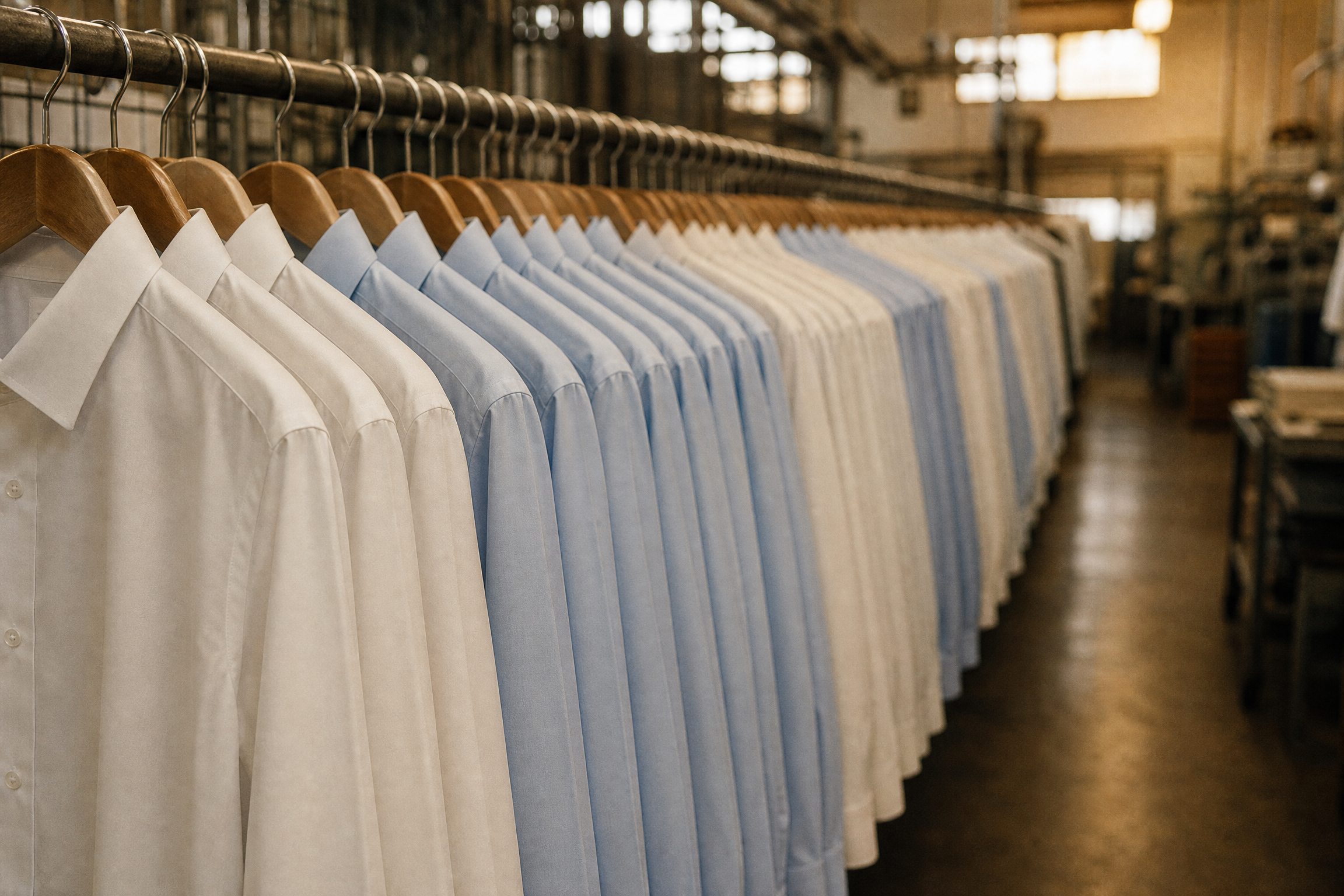
The actual difference is water
The phrase 'dry cleaning' misleads people into thinking it is a more intensive version of washing. It is not more intensive; it is a different chemistry. Dry cleaning immerses garments in a liquid solvent that contains no water, then agitates, extracts and dries them much as a washing machine would.
That single difference — no water — is the whole reason the process exists. Water swells natural fibres, which is what causes shrinkage, distortion and dye bleeding. Solvent does not swell fibres, so a wool jacket comes out of solvent the same size and shape it went in.
The trade-off is what each medium dissolves. Solvent excels at oil-based soils: body oils, grease, cosmetics, food fats. Water plus detergent excels at water-based soils: sugar, salt, most beverages, mud. This is why a professional cleaner is not choosing the 'better' process, but the correct one for the fabric and the stain.
What genuinely needs dry cleaning
Structure is the first test. Anything with a canvas or fused interlining, shoulder padding, a lining, or a shaped collar — suits, blazers, sport coats, tailored dresses and coats — needs solvent. Water swells those internal components at different rates than the outer fabric, and the result is puckering and rippling that cannot be pressed out.
Fibre is the second test. Wool, silk, cashmere, rayon, acetate and most linen tailoring are safer in solvent. Wool shrinks and felts in water; silk loses body and can water-spot; rayon and acetate can shrink dramatically and lose all drape.
Construction details are the third. Knife pleats, permanent creases, beading, sequins and delicate trim generally survive solvent and often do not survive a home wash cycle. And anything whose colour is likely to run — deep reds, indigos, hand-dyed pieces — is safer in solvent than in a machine full of water with other garments.
Water is the variable, not cleanliness — dry cleaning is not 'deeper', it is different.
What belongs in wash and fold
Everyday washables: t-shirts, casual cottons, jeans, activewear, underwear, pyjamas, children's clothes, towels, sheets and pillowcases. If you would put it in your own washing machine without a second thought, it belongs in wash and fold — you are paying for the time and the sorting, not for a different chemistry.
What you get that a home machine does not give you is discipline. Every bag is separated by colour, fabric weight and soil level before anything is washed, whites are kept away from colours, heavy cottons away from synthetics, and visibly soiled items are pre-treated rather than optimistically thrown in with everything else.
Dress shirts: neither, exactly
Dress shirts are the most common mistake we see. People bring them in for dry cleaning, and they should not — cotton dress shirts should be laundered in water.
The reason is the collar and cuffs. The heaviest soil on a dress shirt is body oil and perspiration around the neck, and while solvent handles oil well, the combination of water, detergent and heat handles the full mix of oil, salt and skin residue better on cotton. Water also brightens white cotton in a way solvent does not.
What makes a laundered shirt look professional is the finishing, not the cleaning. Shirts are pressed on a dedicated shirt unit that shapes the collar, the yoke and the cuffs, then returned on hangers with the starch level you asked for. Silk and wool shirts are the exception — those do go through solvent.
When you genuinely cannot tell
Ask before you wash. This sounds self-serving from a dry cleaner, but the asymmetry is real: a garment brought to us unwashed is a routine job, while a garment that has already been through a wrong home wash cycle is sometimes beyond recovery. Shrinkage and dye bleed are not reversible.
Care labels help but are not gospel — they are a manufacturer's liability position, not a considered assessment, and they are wrong often enough that professional cleaners treat them as one input among several. If a label is missing, or the garment is expensive, vintage, or sentimental, bring it in. Inspection costs nothing and we will tell you honestly if a home wash is fine.
Written by the staff of FabriCare of Greenville, a family-owned dry cleaner with three stores and its own plant in Greenville County, South Carolina. Our spotters and pressers are trained in-house, and the advice here reflects what we see across the counter every week rather than what reads well online. If you have a garment you are unsure about, call the store nearest you — inspection is free and we will tell you honestly what is possible.